

Sustainability · 2025
In this section48 topics
- Sustainability Policy2 items
- Sustainability Goals & UN SDGs2 items
- Policy Review2 items
- Business Value Chain1 item
- Stakeholder Analysis1 item
- Environmental Policy & Guidelines3 items
- Environmental Policy Review1 item
- Energy — Plan & Guidelines1 item
- Energy — Electricity Consumption1 item
- Energy — Fuel Consumption1 item
- Energy — Targets1 item
- Energy — Performance & Outcomes1 item
- Water — Plan & Guidelines1 item
- Water — Withdrawal, Discharge & Consumption1 item
- Water — Targets1 item
- Water — Performance & Outcomes1 item
- Waste — Plan & Guidelines1 item
- Waste — Generation, Disposal & Recycling1 item
- Waste — Targets1 item
- Waste — Performance & Outcomes2 items
- GHG — Plan & Guidelines1 item
- GHG — Emissions1 item
- GHG — Emissions Verification1 item
- GHG — Targets1 item
- GHG — Performance & Outcomes1 item
- Environmental Legal Incidents1 item
- Social Policy & Guidelines3 items
- Social Policy Review1 item
- Social — Principles & Standards Practised1 item
- Human Rights Due Diligence2 items
- Employees — Plan & Guidelines3 items
- Employees — Workforce1 item
- Employees — Remuneration & Provident Fund1 item
- Employees — Training & Development1 item
- Employees — Occupational Health & Safety1 item
- Employees — Labour Relations1 item
- Employees — Employee Representation2 items
- Employees — Targets1 item
- Employees — Performance & Outcomes1 item
- Customers — Plan & Guidelines3 items
- Customers — Satisfaction Results1 item
- Customers — Targets1 item
- Customers — Performance & Outcomes1 item
- Community & Social — Plan & Guidelines3 items
- Community & Social — Targets1 item
- Community & Social — Performance & Outcomes1 item
- Other Social Management1 item
- Law Violation Incidents1 item
Sustainability Policy
Has a Sustainability Policy
Yes
Policy Description
The Group of companies focuses on a holistic business approach that promotes expansion and growth across the entire Group, enabling mutual support. This is coupled with conducting business based on principles of social responsibility, environmental stewardship, and consideration for all stakeholders, to ensure stable and sustainable business growth.
Such success requires the understanding and cooperation of employees, contractors, and the community. Therefore, in addition to the Group's consideration for organizational development based on social responsibility principles that impact the quality of its products and services, the Group also prioritizes caring for and developing employees to work happily. It aims to foster a participatory work environment, treating each other with respect for dignity and honor, recognizing that everyone is a part of the company. Furthermore, it extends the scope of such care and development to the community and society.
Sustainability Goals & UN SDGs
Has Sustainability Goals
No
UN Sustainable Development Goals
| SDG Goal |
|---|
| Goal 3 Good Health and Well-being |
| Goal 5 Gender Equality |
| Goal 6 Clean Water and Sanitation |
| Goal 11 Sustainable Cities and Communities |
Policy Review
Policy Reviewed This Year
No
Policy Changed This Year
No
Business Value Chain
Value Chain Description
Business Value Chain Management
The Group prioritizes the management of its business value chain, encompassing procurement and sourcing, logistics and consulting services, delivery and distribution, marketing and customer service, and customer responsibility and after-sales service. We focus on responding to the needs of all stakeholders throughout the value chain - both internal and external - including shareholders, employees, customers, communities, and society. Our goal is to increase business opportunities, mitigate risks, ensure transparency, and strengthen the sustainability of our suppliers and business partners. Furthermore, we aim to create shared value for society to build confidence and trust among stakeholders across all dimensions. Our management guidelines are as follows:
1. Procurement and Sourcing
The Group emphasizes an efficient and transparent procurement process with equitable treatment of all suppliers. We utilize performance evaluation criteria covering quality, delivery, safety, financial stability, environmental and social responsibility, non-violation of human rights, and fair labor practices in accordance with the law. This ensures that the products obtained are of high quality, safe for customer health, and fairly priced.
2. Logistics and Distribution Services
The Group is committed to customer responsibility, prioritizing fast and punctual delivery while ensuring the safety of the customers' products and the well-being of our delivery personnel. We utilize a fleet that meets transportation standards and is environmentally friendly. All logistics staff hold hazardous substance transport licenses and undergo regular safety training.
3. Marketing and Services
The Group reports sales volumes to suppliers and the Department of Energy Business to ensure the company is granted gas purchase quotas on an equal basis with other Section 10 traders. For trading transactions, the company must provide bank guarantees as collateral within the credit terms specified by suppliers. Furthermore, under the "Practice and Responsibility towards Customers" section of our Code of Conduct, the company is committed to the full disclosure of information regarding products and services.
4. Customer Responsibility, After-Sales Service, and Consulting
The Group focuses on providing comprehensive after-sales services to all customer segments. This includes technical training for gas filling personnel, statutory safety testing services, and maintenance of customer gas systems to ensure they meet standards and remain safe for the surrounding community and society. We offer high-quality, safe products and strive for service excellence to meet customer needs. This includes providing advice on product usage, troubleshooting, and handling complaints to ensure maximum satisfaction and sustainable consumption. Additionally, the company strictly adheres to its Personal Data Protection Policy (PDPA) to maintain customer confidence in our business operations.
At present, the Group’s core businesses which represent its primary revenue streams - include Construction services, Liquid Petroleum Gas (LPG) trading, Transportation services, Engineering safety testing and inspection services and Electric vehicle trading. Looking forward, the Group is committed to disclosing the business value chains of its other ventures in the near future.
Stakeholder Analysis
Stakeholder Analysis
| Stakeholder Type | Stakeholders | Stakeholder Expectations | Response to Expectations | Communication Activities |
|---|---|---|---|---|
| Internal stakeholders | 2921 · Description: Employees | 1.Fair compensation
2.Workplace safety
3.Equal treatment of workers | 1.Provide appropriate compensation and employee benefits.
2.Strictly adhere to safety standards.
3.Establish policies on human rights and skill development. | 2941 · Description: Online Communication · 2942 · Description: Internal Meeting · 2945 · Description: Complaint Reception |
| Internal stakeholders | 2913 · Description: Shareholders | 1.Strong financial performance
2.Transparency in operations
3.Sustainable business growth | 1.Operate the business in accordance with 2.Corporate Governance (CG) principles
3.Disclose information accurately through the One Report | 2941 · Description: Online Communication · 2944 · Description: Annual General Meeting (AGM) · 2949 · Other name: Annual Report (56-1 One Report) · Description: Others |
| External stakeholders | 2899 · Description: Suppliers · 2923 · Description: Customers | 1.High-quality products/services (quality gas)
2.Fair pricing
3.Speed and punctuality | 1.Maintain QC standards
2.Improve logistics systems for accuracy
3.Provide effective complaint-handling channels and after-sales service | 2938 · Description: Visit · 2945 · Description: Complaint Reception · 2947 · Description: Satisfaction Survey |
| External stakeholders | 2902 · Description: Community | 1.Safety in business processes
2.Environmental stewardship
3.Job creation or CSR activities | 1.Safety standards in transportation and warehousing to prevent accidents
2.Environmentally friendly business operations | 2940 · Description: Social Event · 2941 · Description: Online Communication · 2943 · Description: External Meeting · 2945 · Description: Complaint Reception · 2949 · Other name: Corporate social media channels · Description: Others |
| External stakeholders | 2936 · Other name: Department of Energy Business · Description: Others | 1.Strict compliance with laws and regulations
2.Possession of valid business operation licenses
3.Safety standards and regulations | 1.Compliance with legally required testing
2.Timely submission of reports
3.Maintaining international safety standards | 2938 · Description: Visit · 2941 · Description: Online Communication · 2943 · Description: External Meeting |
| External stakeholders | 2925 · Description: Financial institution | 1.Debt repayment capability
2.Financial readiness
3.Financial transparency | 1.Effective cash flow management
2.Maintaining creditworthiness (or credit rating)
3.Preparation of auditable financial statements | 2949 · Other name: Quarterly Financial Report · Description: Others |
Environmental Policy & Guidelines
Has an Environmental Policy
Yes
Policy Description
Environmental Dimension of Sustainability Management
The Company prioritizes environmental care in its processes and external environment, considering social and environmental impacts to meet international standards. It is committed to developing clean and modern technology to ensure maximum efficiency in all company processes.
Waste Management
The Group systematically manages waste in its business operations using the 5R principles: Reduce, Reuse, Recycle, Repair, and Reject, as part of the "TAKUNI Care" project. This includes activities under the environmental management policy, encouraging employee participation, and fostering a sustainable environmental consciousness.
Reduce: Involves minimizing waste generation, such as purchasing refillable products.
Reused: Helps extend the lifespan or increase utility by reusing.
Recycle: Involves processing non-degradable, solid waste into new products.
Repair: Involves mending items that can still be fixed to enable their reuse.
Reject: Involves avoiding the use of hazardous products.
Environmental Guidelines
| Guideline |
|---|
| Waste Management |
Environmental Policy Review
Policy Reviewed This Year
No
Energy — Plan & Guidelines
Has an Energy Management Plan
No
Energy — Electricity Consumption
Electricity Consumption
| Metric | Current Year | Previous Year | Two Years Ago |
|---|---|---|---|
| Total electricity consumption within the organization (Kilowatt-Hours) | 0 | 0 | 0 |
| Electricity purchased for consumption from non-renewable energy sources (Kilowatt-Hours) | |||
| Electricity purchased or generated for consumption from renewable energy sources (Kilowatt-Hours) |
Energy — Fuel Consumption
Fuel Consumption
| Metric |
|---|
| Crude oil (Barrels) |
| Coal (Metric tonnes) |
| Jet fuel (Litres) |
| Diesel (Litres) |
| Gasoline (Litres) |
| Fuel oil (Litres) |
| Natural gas (Standard cubic feet) |
| LPG (Kilograms) |
| Steam (Metric tonnes) |
Energy — Targets
Has Set Targets
No
Energy — Performance & Outcomes
Has Performance Results
No
Water — Plan & Guidelines
Has a Water Management Plan
No
Water — Withdrawal, Discharge & Consumption
Water Withdrawal, Discharge & Consumption
| Metric | Current Year | Previous Year | Two Years Ago |
|---|---|---|---|
| Total water withdrawal (Cubic meters) | 0 | 0 | 0 |
| Total water withdrawal by third-party water (Cubic meters) | |||
| Total water withdrawal by surface water (Cubic meters) | |||
| Total water withdrawal by groundwater (Cubic meters) | |||
| Total water withdrawal by seawater (Cubic meters) | |||
| Total water withdrawal by produced water (Cubic meters) | |||
| Percentage of wastewater treated before discharge (%) | |||
| Total water discharge (Cubic meters) | |||
| Total water discharge to third-party water (Cubic meters) | |||
| Total water discharge to surface water (Cubic meters) | |||
| Total water discharge to groundwater (Cubic meters) | |||
| Total water discharge to seawater (Cubic meters) | |||
| Total water consumption (Cubic meters) | 0 | 0 | 0 |
| Recycled water (Cubic meters) |
Water — Targets
Has Set Targets
No
Water — Performance & Outcomes
Has Performance Results
No
Waste — Plan & Guidelines
Has a Waste Management Plan
No
Waste — Generation, Disposal & Recycling
Waste Generation, Disposal & Recycling
| Metric | Current Year | Previous Year | Two Years Ago |
|---|---|---|---|
| Total waste generated (Kilograms) | 0 | 0 | 0 |
| Non-hazardous waste (Kilograms) | 0 | 0 | 0 |
| Non-hazardous waste - Landfilling (Kilograms) | 0 | 0 | 0 |
| Non-hazardous waste - Incineration (with energy recovery) (Kilograms) | 0 | 0 | 0 |
| Non-hazardous waste - Incineration (without energy recovery) (Kilograms) | 0 | 0 | 0 |
| Non-hazardous waste - Other disposal operations (Kilograms) | 0 | 0 | 0 |
| Hazardous waste (Kilograms) | 0 | 0 | 0 |
| Hazardous waste - Landfilling (Kilograms) | 0 | 0 | 0 |
| Hazardous waste - Incineration (with energy recovery) (Kilograms) | 0 | 0 | 0 |
| Hazardous waste - Incineration (without energy recovery) (Kilograms) | 0 | 0 | 0 |
| Hazardous waste - Other disposal operations (Kilograms) | 0 | 0 | 0 |
| Total reused/recycled waste (Kilograms) | |||
| Reused/Recycled non-hazardous waste (Kilograms) | |||
| Reused non-hazardous waste (Kilograms) | |||
| Recycled non-hazardous waste (Kilograms) | |||
| Reused/Recycled hazardous waste (Kilograms) | |||
| Reused hazardous waste (Kilograms) | |||
| Recycled hazardous waste (Kilograms) |
Waste — Targets
Has Set Targets
No
Waste — Performance & Outcomes
Has Performance Results
Yes
Performance Description
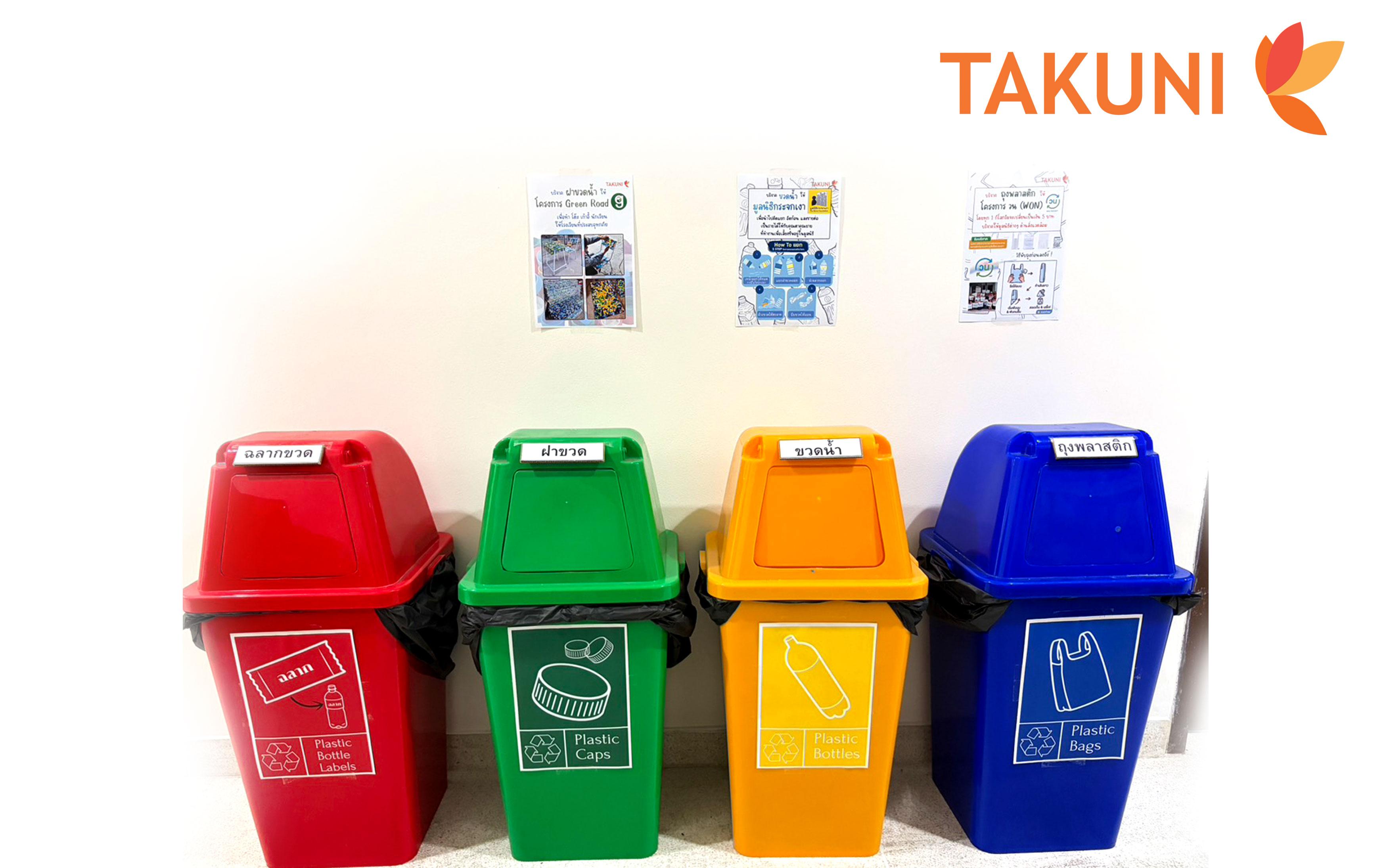
Pre-disposal waste separation activities: Good for us, good for the world.
As the volume of waste in Thailand continues to increase and widely impacts the environment, the group of companies recognizes the need to address waste issues. Therefore, it has initiated an internal pre-disposal waste separation project to implement the concept of "Empowering society cleanly and safely" with a focus on environmental, social, and governance aspects across all dimensions, under the following operational guidelines:
Focus on upstream waste management.
Adhere to the 5 principles of R: “Reduce, Reuse, Recycle, Repair, and Reject”
Promote systematic waste management through efficient separation, collection, and disposal.
Promote efficient resource utilization and reduce waste generation.
GHG — Plan & Guidelines
Has a GHG Management Plan
No
GHG — Emissions
GHG Emissions
| Metric | Previous Year | Two Years Ago |
|---|---|---|
| Total GHG emissions (Metric tonnes of carbon dioxide equivalent) | 0 | 0 |
| Total greenhouse gas emissions 1 (Metric tonnes of carbon dioxide equivalent) | ||
| Total greenhouse gas emissions 2 (Metric tonnes of carbon dioxide equivalent) | ||
| Total greenhouse gas emissions 3 (Metric tonnes of carbon dioxide equivalent) |
GHG — Emissions Verification
Emissions Verified by a Third Party
No
GHG — Targets
Has Set GHG Targets
No
GHG — Performance & Outcomes
Has Performance Results
No
Environmental Legal Incidents
Legal Violation Incidents
| Metric | Current Year | Previous Year | Two Years Ago |
|---|---|---|---|
| Number of cases or incidents of legal violations or negative environmental impact (cases) | 0 | 0 | 0 |
Employees — Plan & Guidelines
Has an Employee Management Plan
Yes
Plan Description
Employee Human Rights
The company prioritizes respect for human rights and fair labor practices across all levels of operation. We ensure that every employee and stakeholder is treated with equality and fairness. The organization is firmly committed to prohibiting forced labor, human trafficking, and illegal child labor. Furthermore, we do not tolerate any form of physical or mental abuse, including threats, detention, confinement, harassment, or violence in any form.
Our fair labor policy covers the entire employment lifecycle from recruitment, compensation, and competency development to performance evaluation and career path planning without discrimination. We are also dedicated to creating a safe work environment that promotes a high quality of life through health and safety measures. We encourage employee participation by allowing them to voice opinions and suggest welfare management ideas through the Welfare Committee, ensuring transparent and fair treatment for all.
Compensation and Welfare
The company sets salary rates that align with the cost of living and legal minimum wage requirements, ensuring they are competitive with leading businesses in the same industry in Thailand and adaptable to current and future market conditions. Special Allowances: Provided for employees assigned to high-risk areas (the three southern border provinces). Short-Term Incentives: Such as annual bonuses based on company and individual performance. Long-Term Incentives: Such as the Provident Fund to ensure long-term financial security.
Training and Development
We are committed to enhancing the potential of both staff and management to develop "future leaders" who can support organizational growth. Career Path Development: Structured growth opportunities within the organization. Competency Framework: Focus on both Knowledge Competency and Skill Competency. Continuous Learning: Providing both in-house training and external seminars from leading institutions to ensure employees remain proficient in their respective fields.
Employee Retention and Performance Management
The company conducts annual performance appraisals to monitor progress through a feedback process that offers guidance, support, and continuous improvement. Performance is measured against set goals using a comprehensive criteria framework aligned with organizational strategy:
Financial KPIs: Revenue and profit-related targets.
Non-Financial KPIs: Operational excellence and efficiency.
Sustainability Development KPIs: Long-term social and environmental impact. These indicators are cascaded from the Corporate Level to the Division Level and finally to the Individual Level.
Employee Engagement
To better understand employee needs and improve retention, the company conducts an Annual Engagement Survey focusing on four key areas:
Engagement Survey: Assessing job satisfaction and behavioral indicators based on corporate values, reputation, and development opportunities.
Job Satisfaction: Evaluating clarity in goals and the perceived meaning of work, as employees who feel their work is significant tend to be more motivated.
Happiness Index: Surveying the employee experience regarding relationships with supervisors/peers, workplace safety, and adequate welfare.
Stress Management: Identifying factors that create pressure, such as workload and work-life balance, to provide necessary support and resources.
Occupational Health and Safety
Our safety management system covers Personal Safety, Process Safety, and Logistics/Transportation Safety. We continuously upgrade our management standards by:
Analyzing and assessing various threat risks that could significantly impact business continuity or employee safety.
Establishing preventive measures, control plans, and risk mitigation strategies.
Conducting systematic safety drills with internal and external agencies.
Appointing Safety Officers to oversee compliance with occupational health and environmental laws.
In the event of an accident, Safety Officers are responsible for investigating the cause, generating a report, and proposing corrective actions to be presented at the monthly executive meeting.
Plan Areas
| Plan Area |
|---|
| Fair employee compensation |
| Employee training and development |
| Promoting employee relations and participation |
| Migrant/foreign labor |
| Child labor |
| Occupational health and safety in workplace |
Employees — Workforce
Workforce Data
| Metric | Current Year | Previous Year | Two Years Ago |
|---|---|---|---|
| Total number of employees (Persons) | 637 | 4,776 | 4,543 |
| Number of male employees (Persons) | 427 | 3,872 | 3,488 |
| Number of female employees (Persons) | 210 | 904 | 1,055 |
| Total employment of disabled persons (people) | 2 | 2 | 2 |
| Total disabled employees (people) | 2 | 2 | 2 |
| Total male disabled employees (people) | 1 | 1 | 1 |
| Total female disabled employees (people) | 1 | 1 | 1 |
| Total disabled workers who are non-employee (people) | 0 | 0 | 0 |
| Contributions to the fund for promoting and improving the quality of life for disabled persons | 0 | 0 | 0 |
| Total number of male employees in operational level (Persons) | 379 | ||
| Total number of male employees in management level (Persons) | 37 | ||
| Total number of male employees in executive level (Persons) | 11 | ||
| Total number of female employees in operational level (Persons) | 196 | ||
| Total number of female employees in management level (Persons) | 11 | ||
| Total number of female employees in executive level (Persons) | 3 |
Employees — Remuneration & Provident Fund
Remuneration & Provident Fund
| Metric | Current Year | Previous Year | Two Years Ago |
|---|---|---|---|
| Total disabled employees (people) | 315,172,536.64 | 1,608,221,430 | 1,398,555,060 |
| Total male employee remuneration (Baht) | |||
| Total female employee remuneration (Baht) | |||
| Number of employees eligible to participate in PVD (persons) | 336 | 247 | 243 |
| Total number of employees joining employee provident fund (Persons) | 132 | 135 | 164 |
| Percentage of total number of employees joining employee provident fund to total number of employees (%) | 20.72 | 2.83 | 3.61 |
| Number of PVD members / Total eligible employees (%) | 39.29 | 54.66 | 67.49 |
| Total amount of provident fund contributed by the Company (Baht) | 2,399,242 | 391,498 | 112,569 |
| Total amount of provident fund contributed by employee (baht) | 4,600,454 | 1,242,483 | 361,131 |
Employees — Training & Development
Training Data
| Metric | Current Year | Previous Year | Two Years Ago |
|---|---|---|---|
| Average employee training hours (Hours / Person / Year) | 13.59 | 18 | 16 |
| Employee development and training expenses (baht) | 719,147.95 | 485,336.55 | 566,557.39 |
Employees — Occupational Health & Safety
Occupational Health & Safety Data
| Metric | Current Year | Previous Year | Two Years Ago |
|---|---|---|---|
| Total number of lost time injury incidents by employees (Cases) | 0 | 24 | 1 |
Employees — Labour Relations
Labour Relations Data
| Metric | Current Year | Previous Year | Two Years Ago |
|---|---|---|---|
| Total voluntary resignations (Persons) | 102 | 0 | 0 |
| Male employees who voluntary resigned (Persons) | 53 | 0 | 0 |
| Female employees who voluntary resigned (Persons) | 49 | 0 | 0 |
| Percentage of employee turnover leaving the Company voluntarily (%) | 16.01 | 0 | 0 |
| Evaluation result of employee engagement | 0 | 0 | 0 |
Employees — Employee Representation
Employees Are Represented Collectively
Yes
Forms of Representation
| Form |
|---|
| Welfare committee |
Employees — Targets
Has Set Employee Targets
No
Employees — Performance & Outcomes
Has Performance Results
No
Customers — Plan & Guidelines
Has a Customer Management Plan
Yes
Plan Description
The Company has established an agreement between the Company and its customers regarding the confidentiality of inspection, testing processes, and various services provided by the Company (Non-Disclosure Agreement: NDA).
Plan Areas
| Plan Area |
|---|
| Protection of customer personal information |
Customers — Satisfaction Results
Customer Satisfaction Results
| Metric | Current Year | Previous Year | Two Years Ago |
|---|---|---|---|
| Evaluation results of customer satisfaction | 1 | 1 | 1 |
Customers — Targets
Has Set Customer Targets
No
Customers — Performance & Outcomes
Has Performance Results
No
Community & Social — Plan & Guidelines
Has a Community & Social Plan
Yes
Plan Description
The Company is committed to driving the transition toward a green economy (Green Future) while enhancing the quality of life for surrounding communities and society. This commitment is guided by principles of stakeholder engagement and relationship building with employees and all stakeholders through responsible activities that address their expectations and needs across economic, social, and environmental dimensions.
The Company also ensures that its operations remain adaptive and aligned with rapidly changing circumstances. Key initiatives include local employment in Rayong, Chachoengsao, and nearby operational areas, local procurement, and knowledge sharing with society. These efforts aim to strengthen income generation, resilience, and career stability for community members, while supporting balanced business growth alongside the improvement of community well-being.
Plan Areas
| Plan Area |
|---|
| Employment and professional skill development |
Community & Social — Targets
Has Set Community & Social Targets
No
Community & Social — Performance & Outcomes
Has Performance Results
No
Other Social Management
Plan & Outcomes — Description
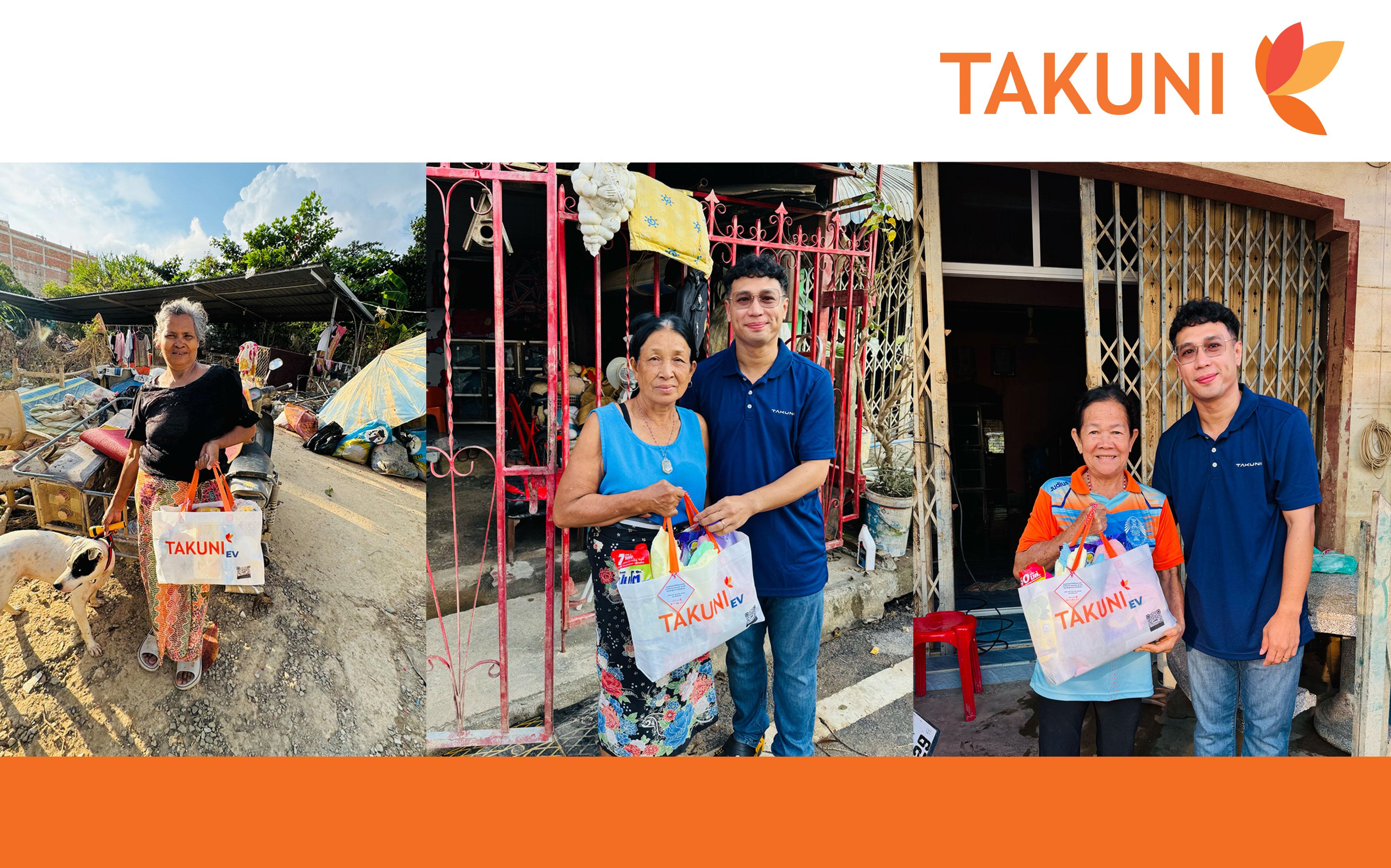
Donations of goods to help flood victims in Hat Yai District, Songkhla Province
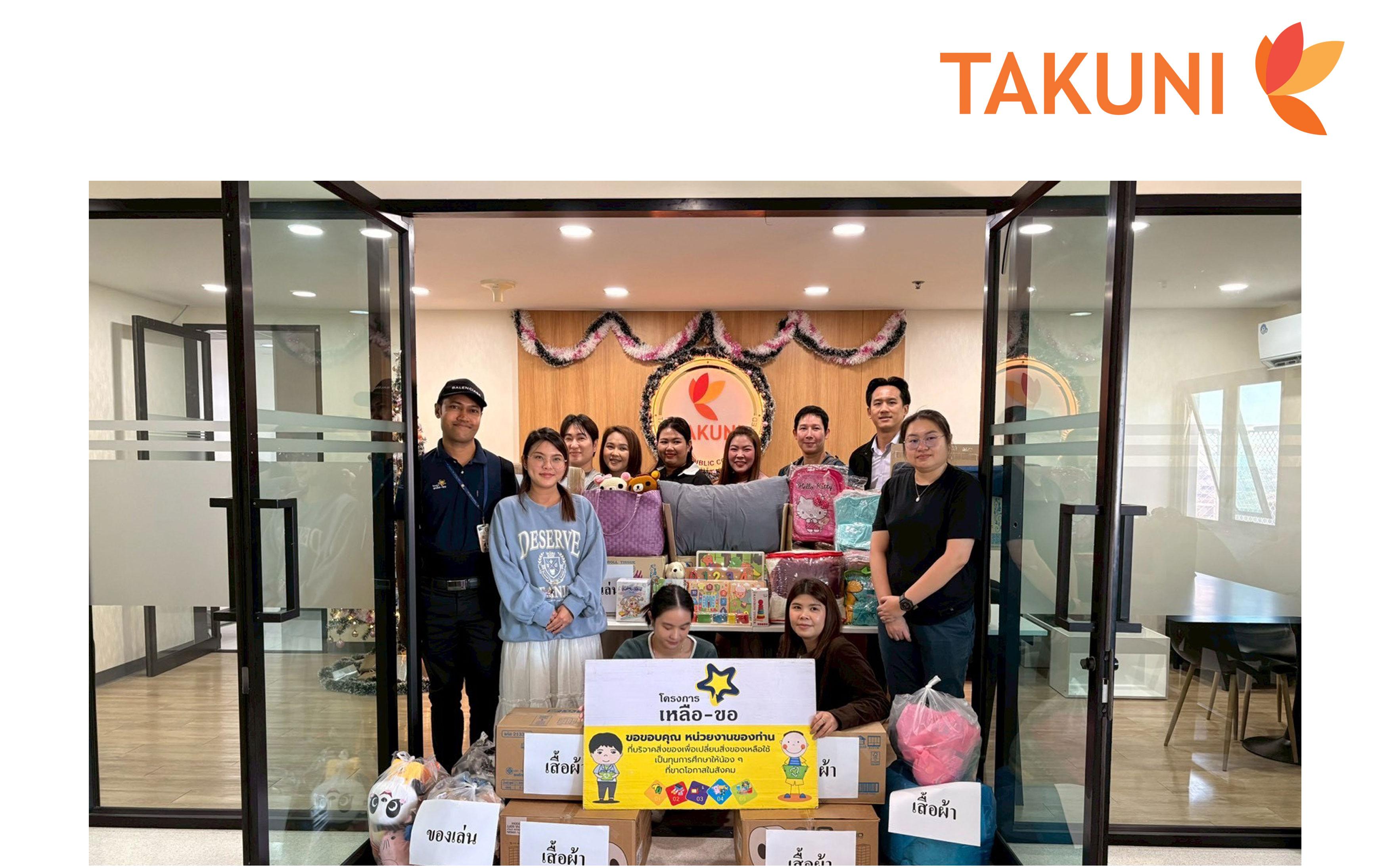
Donating items to underprivileged children through the 'Give-Request' project at the Nok Khamin Foundation House
Law Violation Incidents
Law Violation Incidents
| Metric | Current Year | Previous Year | Two Years Ago |
|---|---|---|---|
| The total number of cases or incidents of significant violations of laws or regulations regarding social and human rights (Cases) | 0 | 0 | 0 |
| The total number of cases or incidents that cause significant labor disputes (Cases) | 0 | 0 | 0 |
| The total number of cases or complaints related to consumer rights violations (Cases) | 0 | 0 | 0 |
| The total number of cases or complaints related to partner rights violations (Cases) | 0 | 0 | 0 |
| The total number of cases or incidents that cause disputes with the community/society (Cases) | 0 | 0 | 0 |
| The total number of cases or incidents related to cyber security or customer data breaches (Cases) | 0 | 0 | 0 |
| The total number of cases or incidents related to safety and occupational health at work (Cases) | 0 | 0 | 0 |